Summer with the Swallows
June 2026
They’re back! The familiar twittering, the darting in and out of the stables lifted my spirits. Summer was truly here! Over the next few days, the remnants of their old nest in Norman’s stable received a brand new make-over, with added bits of mud, straw, and a sumptuous lining of white feathers. Our little yard is near the stream, so there are plenty of midges and other insects for them to feed on.
The weather changed to very hot- the beginning of the heatwave- though some call it summer! That gave me the excuse to sit quietly in the shade, watching the comings and goings of these amazing birds. Apparently swallows take it in turns to sit on the eggs, and I could just see one parent on the nest, and the other on feed duty. The feathers in the nest offered great privacy, so it was quite difficult to get a glimpse.

About 2 weeks later, five small, grey heads appeared, or rather five large beaks, each with fluffy top-not attached. Activity heightened, as the parents circled around the stables, high in the air before zooming torpedo-like past Norman’s head to feed the gaping mouths.
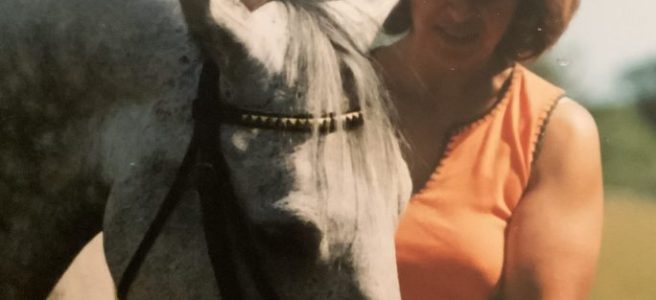
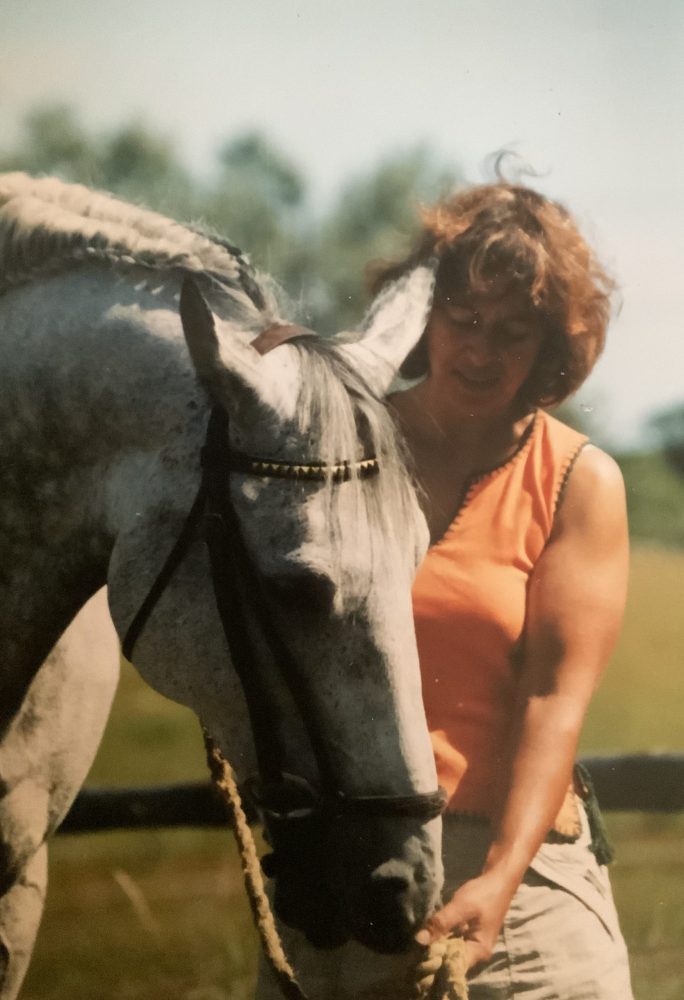
 Amazingly, my horse, Norman, is usually quite nervous, be tolerated the swallows whizzing past his head as they flew back and forth. He took the responsibility of being on guard duty very seriously, standing as close to the nest has he could, gazing at the tiny fledgelings.
July 2026
The heat continues, and the baby swallows were struggling. They flopped languidly on the wooden beam supporting their nest, being a bit too big to all fit in now. The two smaller ones fell out frequently. Norman would peer at me through his window, his ears twitching, to let me know I needed to quietly pick the tiny birds and replace them. I fixed a plastic container to the wall, so I could reach up from the ground more easily.
I filled a small syringe with water, and gave the fallen babies a couple drops of water. With a shake of their heads, they revived enough to perch back on their shelf. The parents twittered to them as they continued their relentless feeding through the day. They must use up so much energy bringing their little ones food, they keep going for hours.
 Watching how quickly the little birds grew was fascinating. head fluff was replaced with a black cap, wings were stretched, and twittering became more frantic as they jostled for space. They spread out along the shelf, as their tails grew, and pink chests appeared.
At about three weeks later, the babies were taking trial flights inside the stables through the eaves into Heinrich’s next door, though he seems oblivious to them.
Norman stood proudly as his charges twittered and flapped, brushing past his ears, as they progressed to diving out of the door. They flew erratically at first, trying to master the smooth flight of the parents. Three of the baby swallows survived, whizzing around the yard as their flying skills improved. They learnt to catch their own food on the wing, flying faster, and with a better sense of direction. As the days passed, I could hear them all twittering in the trees, though the babies would return at dusk to the stable, to be fed by their parents.
August 2026
Three more little heads appeared in the nest, amongst the feathers. This time, the parents were aided by the first brood in the feeding frenzy. The air was full of cheeping, and comings and goings, as five swallows cared for the new ones. Norman continued with his protection duties, as proud guardian. These three seemed stronger than the last brood. The weather was still hot, but kinder than it had been, so they seemed to thrive better.
 One, I named him Billy Bunter, was positively rotund. He would be the the first in line for food, beak outstretched as far as could be.
 Flight day came. The babies fluttered their wings, their shiny new tail feathers ready for take-off. One fledgeling sat proudly on the edge of the plastic pot. A few moments later, it took the plunge and flitted out of the door, becoming a proficient flyer after just a a few flaps of its wings. Billy Bunter was always the last to take flight on the practice runs, and his mother, I guess it was her, would chivvy him along, battering him with her wings and scolding him with intense screeching.
The next morning, the stable was empty. On hearing twittering above, I looked up to see all eight swallows- both broods of three, and the parents, all circling and flitting around, in and out of the stables, and around my head. It was such a lovely feeling to be included in their joyous display.
 It is the end of August now. The weather has cooled somewhat, though everywhere is very dry. We have had some rain, but we need more. The swallow family are still around: I hear them in the trees. They zip around the yard every morning and evening, feeding on the midges, though no longer use the nest.
I guess they will be off soon, on their way to Africa for the winter. It is amazing that they fly all that way, about 200 miles a day at speeds of around 20 miles per hour! Apparently tithe length of their tails determines how attractive they are as a mate. Males with longer streamers are more likely to pass on good genes to their offspring, according to the RSPB. Swallows live about 2 years, and return to where they were born. I am looking forwards to seeing this year’s babies back next year to raise their own brood.


 As an Integrative therapist, I use a holistic approach, to improve your physical and mental health, taking into account how traumatic events impact on our whole being. When we feel emotionally stressed, anxious, depressed, this has an impact on the body. Bodily symptoms and feelings are invaluable in exploring the causes of distress. Once sense can be made of how we feel in the present, progress can be made into looking forwards with more positivity and joy..