Meditation

Meditation

I offer mediation sessions both on-line and in person at my psychotherapy practice.

What is meditation?

Meditation  helps you to recognise your own thoughts and anxiety, and help you to learn relaxation techniques, developing the ability to cope with stressful situations. Meditation is about enjoying the moment and to see yourself in a kind and positive way.

Learning techniques that can be used for a short time each day can help to introduce calmness into your life, reducing the body’s signs of stress such as high blood pressure, feelings of panic, shortness of breathe and so on. Meditation promotes a holistic feeling of well-being for both mind and body.

What happens in a session?

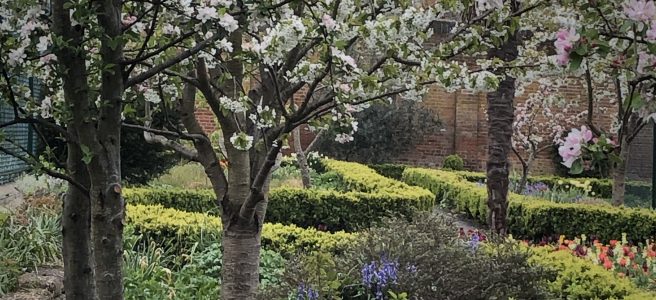
We will check your posture and focus on your breath to start with to calm your mind- and to slow down a ‘busy’ brain. We will work through the body releasing tension, aiming for a deep sense of peace and relaxation. We will spend some tome on relaxing each part of the body in turn, focusing on breathing techniques. You will be guided through a meditation, such as walking through a garden to help you to mentally relax and to bring about a sense of calm, like a daydream. We all have a special place to remember where we felt happy and relaxed.

Meditation can help to:
  • Reduce anxiety
  • Balance mind, body and soul
  • Promote self-healing

Stressful situations such as a visit to the dentist, sitting in traffic jams etc can be managed in a calmer way with meditation techniques, enabling you to keep your cool when under pressure! Performance anxiety, such as making a speech or taking part in a competition can be significantly reduced with meditative techniques.

Contact me for further details.


What is Ecotherapy?

Ecotherapy, or nature therapy, is about being outdoors, using nature to compliment counselling sessions. Talking about what you notice outdoors in your counselling sessions can help you to understand more about what is going on for you right now.

How does Ecotherapy (Nature therapy) work?

  • Being outside connects us to nature, the here and now.
  • Using your senses in the surroundings connects mind and body.
  • It gives an opportunity for self-reflection
  • Creates a sense of calm and brings awareness to how you are feeling right now.
  • It can be easier to talk about your worries when walking, moving around.
  • exploring nature leads to exploring you own thoughts.


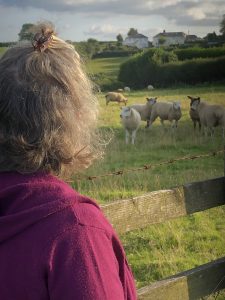
Using Mindfulness outdoors is about paying close and full attention to something in your awareness, to still a busy mind, focusing on your breath. Examples are: listening to the birds, feeling the breeze on your face, feeling the ground underfoot, touching leaves of a tree. Using your senses helps you to be focus on how you feel right now.

Considerations

  • Be comfortable, dress for the weather, being cold, wet, or too hot, distracts from being able to fully focus on what is around you.
  • Being outdoors may evoke memories, which is where my role as your therapist can be useful, to explore sad, and happy memories, to help you to understand, and to learn about  your feelings.

Contact me for more information or to book.

Price

Take a look with me at what Ecotherapy is and how it can benefit you.


Mindfulness in Nature Workshop Sunday 24th July 2022

SUNDAY 24th JULY 2022

MINDFULNESS IN NATURE WORKSHOP

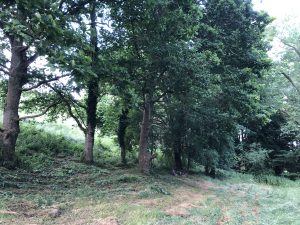
We had a fabulous relaxing and informative day. The weather was kind-not too hot-with a cool wind creating movement  through the trees.

A variety of mindfulness practices connected us to the healing power of nature, with great participation from the group.The Tai Chi section, and drumming amongst the trees proved very popular and terrific fun to do.


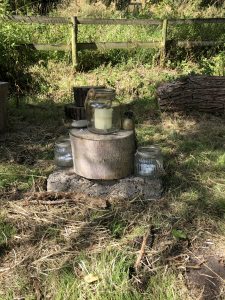
The day ended with the creation of a fabulous mandala, just using natural items nearby.


Come and join Claire and Dawn for our next wonderful day on Friday 9th September 2022 in a quiet and private setting, offering a unique and rustic feel among the woodland and fields.

TO BOOK: 

Dawn Harding 07585 558101


Claire Ballardie interview on BBC Radio Gloucester

Claire Ballardie interviewon BBC Radio Gloucester

Ecotherapy, Nature therapy

I had a lovely chat this afternoon with Dom Cotter at BBC Gloucester Radio about Nature Therapy.

Whatever the weather, there is always an element we can connect to in some way with our senses. The snow drops are coming up, and hanging in there, tempting us to look forwards to new growth as spring arrives.

I am on just after 5pm, after a track from Madonna!

Claire Ballardie on Nature Therapy with Dom Cotter BBC Radio Gloucester


What is Attachment Theory?

What is attachment theory?

Attachment is a biological impetus to survive throughout life. Experiencing an enduring and consistent relationship develops a secure attachment style, enabling the exploration of the world, with the knowledge that the secure base is consistently accessible.

Attachment theory by John Bowlby, examines the attachment styles learned from a very young age, in a response to separation, which influence childhood behaviour and develop as survival mechanism as adults. Separation from a secure attachment figure, causes emotional distress, such as anger, anxiety and depression, affecting attachment behaviour (Mary Ainsworth).

Mary Main, a student of Mary Ainsworth, related Ainsworth’s findings in infant attachment to adult attachment. She suggested that an individual’s Internal Working Model was developed from learning from parental example. This model was a blueprint for understanding life experience. Being both physically separated from loved ones, and emotionally distant renders the attachment insecure.

Attachment styles

A particular style of attachment will lead to a distinct behaviour pattern and way of establishing relationships. This has implications for the building of relationships with friends, loved ones, pets and, not forgetting,  the therapist.

A Secure – a loving, trustful relationship, where ‘someone has your back’. In a secure relationship, it is easy to be yourself, feel valued, and to have your needs met.

Styles of insecure attachment as adults are identified as:

Ambivalent – a ‘take it or leave it’ approach to relating to others.

Avoidant– resisting intimacy with others, reluctant to commit to relationships, withdrawing from others.

Disorganised– fluctuating between seeking approval, and pushing others away.

Dismissive– a lack of trust in others, low self-esteem, feeling unworthy of being loved.

Preoccupied– difficulty in committing full attention to others.

How Attachment works in Therapy

Building a relationship with the therapist is influenced by learned attachment styles. The role of the therapist is to be the ‘safe base’ for the client, and to learn about the client’s ‘internal working model’, their individuality. The therapist offers support without judgement, in a role of trust, enabling the client to explore their own relationships with others.

Exploring the attachment style between therapist and client, noticing what strengthens, or disrupts, the therapeutic relationship, paves the way for a secure attachment with the therapist, with an ease of communication developing.

Why is understanding attachment theory important?

Learning to communicate with others helps to build, or repair, relationships with our loved ones. Forming a secure attachment in adulthood, that may have been missing from childhood, leads to improved self-worth, self-confidence, and a capacity to love, and be loved.

©Claire Ballardie 2022

References

Ainsworth, M., Blehar, M., Waters, E., & Wall, S. (1978) Patterns of Attachment: A psychological study of the strange situation. Hillsdale, NJ: Erlbaum

M. Parkes and Bowlby, J. (1988) A Secure Base. London: Routledge

Crittenden, P, M. (2017) Gifts from Mary Ainsworth and John Bowlby. Clinical Child Psychology and Psychiatry (2017) Vol. 22 (3) 436-442

Main, M. (2000) ‘The Organized Categories of Infant, Child, and Adult Attachment: Flexible Vs. Inflexible Attention Under Attachment-Related Stress’, Journal of the American Psychoanalytic Association, 48(4), pp. 1055–1096. doi: 10.1177/00030651000480041801. (Accessed 7 February 2022).

Murray-Parkes, C., Stevenson-Hinde, J. & Marris P.  (1993) Attachment across the Life Cycle. Routledge.